
The Old Victrola
- Richard Isenberg
- Jul 12
- 2 min read
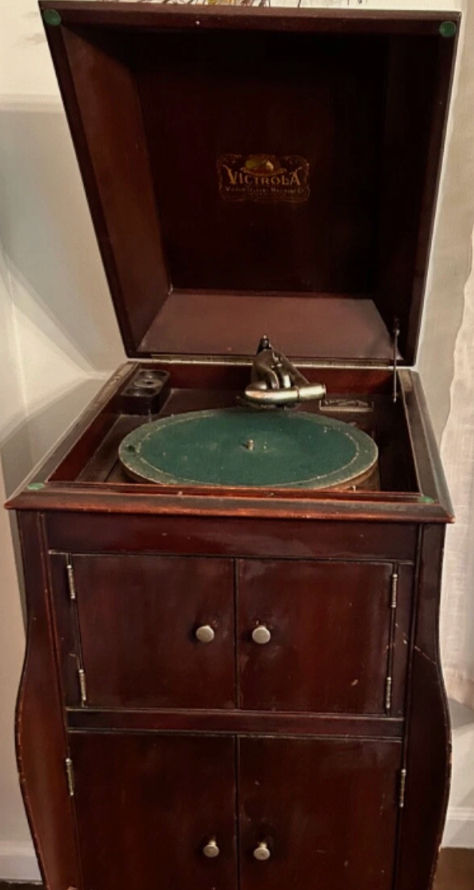
One of my earliest memories was playing in the basement of my grandfather’s house. There were many old toys and curious objects from my mother’s childhood. By then they were quaintly old fashioned, but always fascinating to play with whenever we visited. However, the jewel of this basement playground was the magnificent old Victrola and the collection of records from an earlier age.
The “Victor Talking Machine” was the first popular sound recording devise. My grandfather had bought this machine about 1920. It was entirely mechanical, using no electricity and housed in a handsome wooden cabinet about four feet tall. The lid lifted up revealing the turn table and needle arm. The round turn table was covered with green felt. A small lever on the side acted as a brake to stop or release the spinning plate. The silver needle arm had a joint so that the needle could be swung upward and off the record disk. Steel or bamboo needles were held tightly in the arm’s head with a set screw. The power for the machine was provided by a spring hidden deep inside the cabinet. Before playing a record you would have to turn the crank on the side of the machine a dozen times to tighten the spring and provide power to turn the records. A collection of early records was stored in the front of cabinet behind swinging double doors. We would choose a favorite march or dance and place the black disk on the turn table. Then, releasing the brake, the record would begin to spin. Once it got up to the playing speed of 78 rpms, the needle would be carefully placed down on the edge of the grooves. And then the magic of music would emerge from the machine. It had a fuzzy, tinny sound, but never ceased to amaze us how the music flowed from the old machine. Two small double doors at the top of the cabinet controlled the volume. Open the door a bit and the sound would get louder, close them and it would play quietly. Each record held only one song on each side. So we would play a song, turn the record over, crank up the machine, and play the other side. Many happy hours were spent listening to the music of that earlier era.
When I was married I asked my grandfather if he would be willing to let me have the Victrola as a wedding gift. Surprised he asked, “Why would you want an old thing like that?” Indeed, I had all the most modern stereo equipment of that time and a large collection of modern records. The high-tech, hi-fi machines had vastly superior sound, but somehow lacked magic. The Victrola has now been in my home almost as long as it was in my grandfather’s house and I hope that when I can no longer care for it, one of my sons will want it for their home. More than just a machine to play scratchy old records, it has also recorded four generations of memories. I never tire of listening to the musical magic that is hidden within the worn wooden cabinet of the old machine.


Comments